How SEO Works: A Complete Guide
The process behind better rankings and more organic traffic — keyword research, content creation, on-page optimization, quality backlinks and growth.
Adivinar Catalyst Team
August 11, 2026 · 9 min read
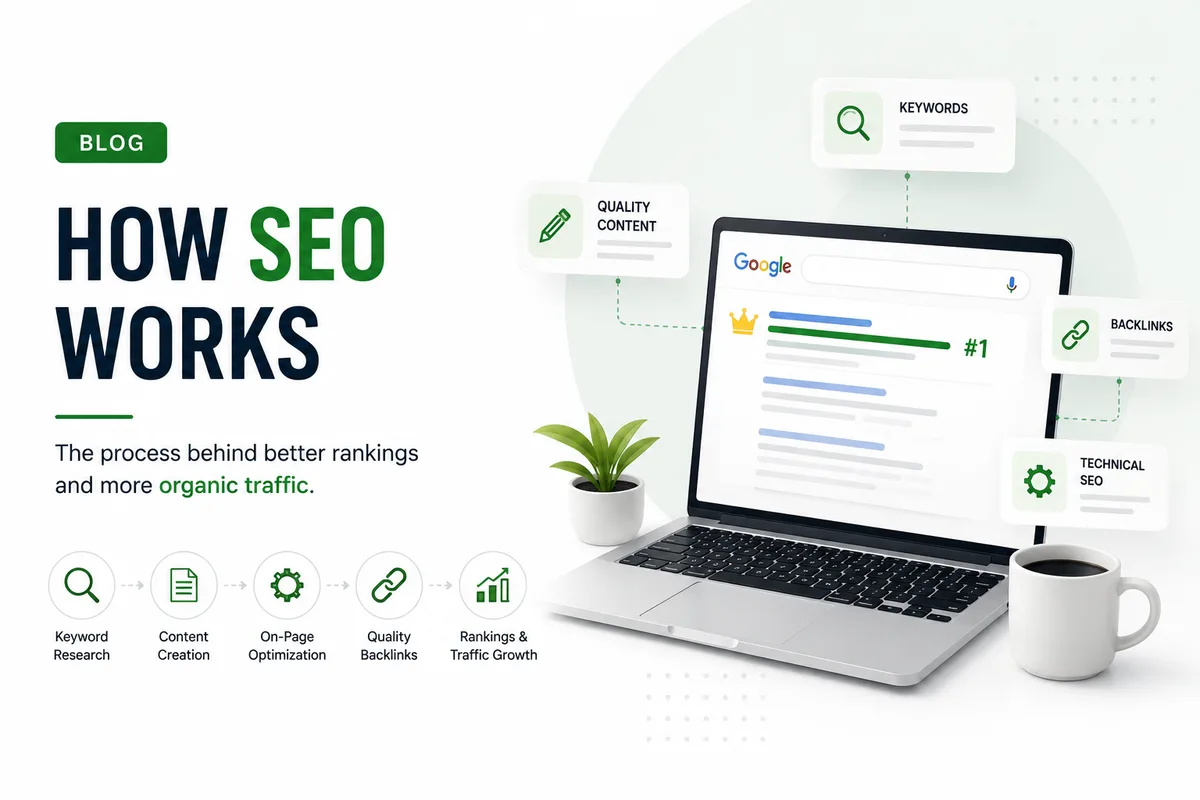
SEO gets treated like a mystery box, but the actual pipeline is straightforward. It's the execution — and the patience — that's hard.
The five-step process
- Keyword research — find what real people are actually searching for, and how they phrase it, not what you assume they'd search.
- Content creation — write the thing that genuinely answers it, better and more completely than what's already ranking.
- On-page optimization — structure, headings and internal links that help both readers and crawlers understand what the page is about.
- Quality backlinks — earn the links that signal real authority, from sites a search engine already trusts.
- Rankings and traffic growth — the compounding result of doing the first four consistently, not a single lucky post.
Why "just write good content" isn't enough advice
Good content that nobody can find and nothing links to doesn't rank, no matter how well written it is. Search engines are trying to answer one question for every query: what's the most helpful, trustworthy result for this specific search? Every step in the process above is really just evidence you're giving them to answer "yes, this one."
How long it actually takes
New pages on a new or low-authority site can take three to six months to show meaningful movement, even when everything is done right. This isn't a platform limitation — it reflects how long it genuinely takes to accumulate the trust signals (consistent publishing, real engagement, real backlinks) that separate a page search engines trust from one they're still evaluating.
The most common mistake
Giving up at month two. The compounding effect in step five is real, but it's back-loaded — the first few months often look like nothing is happening, right before the curve bends upward. Teams that stop publishing during that quiet stretch rarely see the payoff; teams that keep going almost always do.
There's no shortcut through step five. It only shows up after the rest is done properly, repeatedly.
Adivinar Catalyst Team
Writing about AI, marketing and building AI-native products.
More From the Blog


Have a Project in Mind?
Let's talk about how AI-native systems can grow your business.