SEO and AI: Smarter Optimization, Stronger Rankings
AI is transforming how we analyze, optimize and rank for the future of search — smarter keyword research, content optimization and predictive analytics for better rankings.
Adivinar Catalyst Team
August 28, 2026 · 8 min read
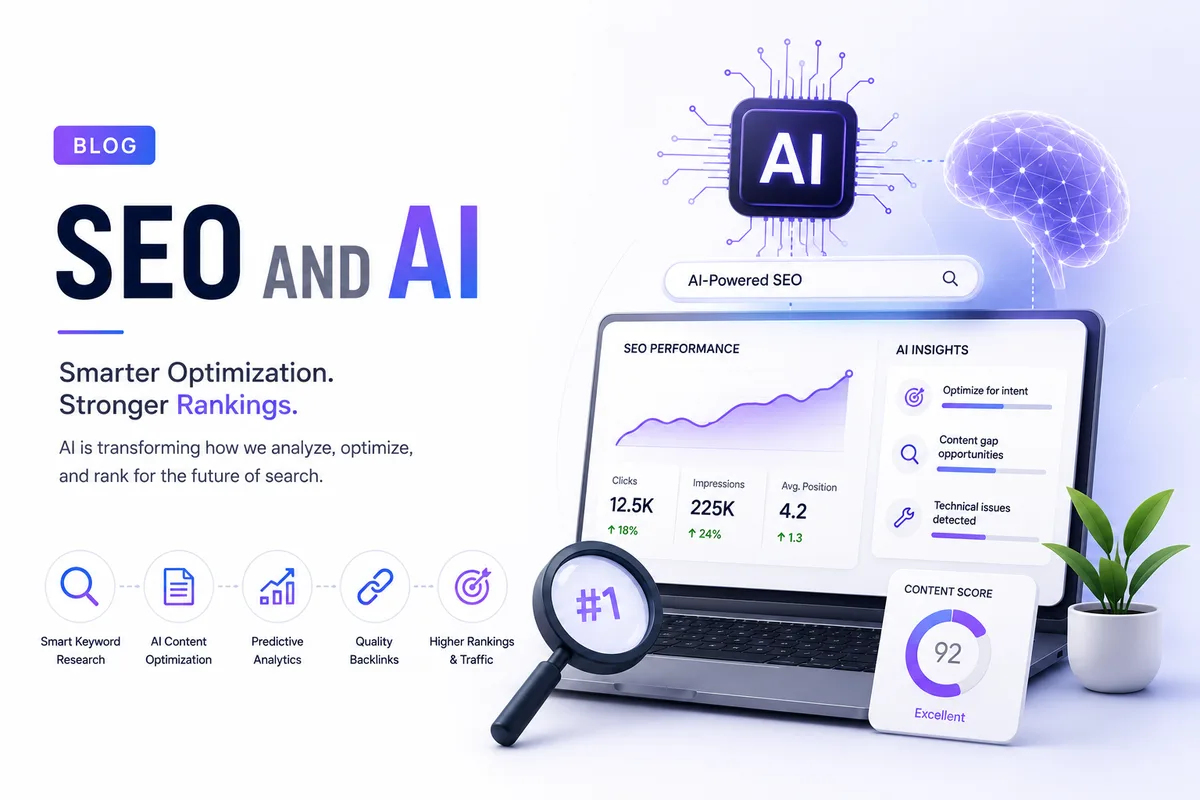
Search hasn't stood still, and neither has the work of ranking well. AI now touches nearly every stage of SEO — from the first keyword you research to the backlink you earn months later. The teams pulling ahead aren't the ones with the biggest content budget; they're the ones using AI to spend that budget on the right pages.
Where AI is actually moving the needle
- Smart keyword research — surfacing intent, not just volume. A keyword with 500 searches a month and clear buying intent often outperforms one with 10,000 searches and no clear intent behind it.
- AI content optimization — flagging gaps against what's already ranking, section by section, instead of guessing what a "complete" article looks like.
- Predictive analytics — forecasting which pages are worth the investment before you write a word, based on competition, difficulty and realistic timelines.
- Technical issue detection — catching crawl and indexation problems automatically, often before they show up in a traffic dip three weeks later.
Content gap analysis: the quiet advantage
One of the least glamorous but highest-leverage uses of AI in SEO right now is content gap analysis — comparing a page against every top-ranking competitor and flagging exactly which sub-topics, questions or entities are missing. It turns "write a good article" into a checklist: these are the six things the top five results all cover that you don't.
Technical SEO hasn't gone away
AI has made technical audits faster, not obsolete. Crawl budget issues, duplicate content, slow Core Web Vitals and broken internal linking still quietly cap how well a great article can perform. The tools got smarter; the underlying problems they're solving stayed exactly the same.
What this means for content strategy
Less time is spent producing content nobody was searching for, and more time goes into the handful of pages with real intent and real competition worth winning. That shift alone — from "publish more" to "publish what matters" — is where most of the measurable ranking gains are coming from in 2026.
None of this replaces good writing or real backlinks. It just means less time guessing, and more time on the work that actually moves rankings.
Adivinar Catalyst Team
Writing about AI, marketing and building AI-native products.
More From the Blog
Have a Project in Mind?
Let's talk about how AI-native systems can grow your business.